
8 Sep, 2026
September mortgage and real estate market update in Ontario
Canadian Market,Market Insights,Market Trends,Mortgages Comments Off on September 2026 Canadian Housing Market Update: 5 Trends Shaping the Market

5 Trends Shaping the Housing Market

September is here, and Canada’s housing market continues to shift.

The Canadian housing market is becoming increasingly complex. New home construction is slowing, mortgage preferences are changing, housing supply is increasingly being directed toward rentals, and economic pressures are affecting different provinces in different ways.

For homeowners, homebuyers, real estate investors, and anyone planning to refinance or renew their mortgage, understanding these trends can help you make more informed financing decisions.

Here are five key housing market developments to watch this September and what they could mean for borrowers and investors.

1. Homeowner Construction Is Facing a Significant Slowdown

Canadian home price expectations by province showing Saskatchewan with the strongest forecast for price growth

Canada’s pipeline of new housing intended for homeowners is facing increasing pressure.

According to the Canada Mortgage and Housing Corporation (CMHC), housing construction is expected to remain weak as builders contend with softer demand, elevated construction costs and unsold inventory. Condo construction is particularly vulnerable, especially in Ontario and British Columbia.

CMHC’s latest data also tracks housing starts separately by intended market, including homeownership, rental and condominium construction, highlighting how significantly the composition of new housing is changing.

For more information, view CMHC housing starts and construction data.

2. Variable-Rate Mortgages Are Becoming a Bigger Part of the Conversation

Canadian home price expectations by province showing Saskatchewan with the strongest forecast for price growth

Mortgage preferences continue to evolve as borrowers reassess how they want to structure their debt.

Recent Bank of Canada data shows that variable-rate mortgages remain a significant part of Canada's mortgage market, while borrowers continue to have a wide range of fixed and variable options available to them.

The choice between fixed and variable is not simply about which rate is lower today. It can also depend on a borrower’s income, financial flexibility, risk tolerance and plans for the property.

The Bank of Canada has also highlighted that borrowers renewing five-year fixed mortgages in 2026 could face substantially different payments than they had under their previous mortgage, making renewal planning particularly important.

Explore current Canadian mortgage lending data from the Bank of Canada.

What Does This Mean for Homeowners?

There is no one-size-fits-all mortgage solution.

If your mortgage is coming up for renewal, don’t automatically sign the renewal offer from your existing lender without reviewing your options first.

A mortgage renewal can be an opportunity to look at:

  • Fixed versus variable rates
  • Shorter versus longer terms
  • Payment flexibility
  • Prepayment options
  • Refinancing opportunities
  • Debt consolidation
  • Accessing home equity

The key takeaway: A mortgage renewal should be treated as a financial review — not simply a paperwork exercise.

Learn more about mortgage renewals with Cashin Mortgages

3. Canada Doesn’t Have One Housing Market: Local Conditions Matter

Canadian consumer confidence infographic showing a July 2026 rebound after several years near historic lows

One of the most important housing trends this year is the growing difference between regional markets.

CMHC expects housing conditions to vary considerably across the country. Ontario and British Columbia are facing affordability challenges and weaker activity, while Prairie markets are expected to maintain stronger sales and price growth. Quebec is expected to see more balanced conditions.

Recent market data also shows meaningful differences in inventory levels across provinces. For example, July 2026 months of supply were considerably higher in British Columbia than in Alberta and Saskatchewan.

What Does This Mean for Borrowers?

Location matters.

A buyer in Ontario may be facing very different conditions from a buyer in Alberta or Quebec. The same applies to someone refinancing a property or purchasing an investment property.

National housing headlines can provide useful context, but your specific city and neighbourhood may tell a very different story.

Before making a major financial decision, consider:

  • Local inventory
  • Employment conditions
  • Population trends
  • Property prices
  • Rental demand
  • Construction activity
  • Mortgage affordability

The key takeaway: National statistics provide the big picture, but local market conditions should drive your financing strategy.

See where Cashin Mortgages serves clients across Canada


4. Tariffs and Economic Uncertainty Could Affect Borrowers

Canadian housing supply infographic showing rising rental construction and declining single-family home construction

Housing doesn't operate in isolation from the broader economy.

Canada is entering September with renewed trade uncertainty. The U.S. has imposed new tariffs on certain Canadian goods, while Canada is scheduled to introduce matching counter-tariffs on selected U.S. products beginning September 8, 2026. The measures affect industries including steel, appliances, agricultural equipment, electronics and other goods.

The Bank of Canada held its policy rate at 2.25% on September 2, 2026, while noting that trade tensions have created additional uncertainty around Canada's economic outlook and inflation.

For the housing market, the important issue is how economic uncertainty affects employment, business investment, consumer confidence and household income.
What Does This Mean for Borrowers?

This could be particularly relevant for self-employed borrowers, business owners and clients working in trade-sensitive industries.

If your income or business is affected by changing economic conditions, preparing for financing sooner rather than later can be valuable.

Having your financial documents organized and understanding your borrowing options before you need financing may help reduce delays when an opportunity arises.

The key takeaway: Economic uncertainty makes preparation even more important.

5. Housing Construction Is Shifting Toward Rentals

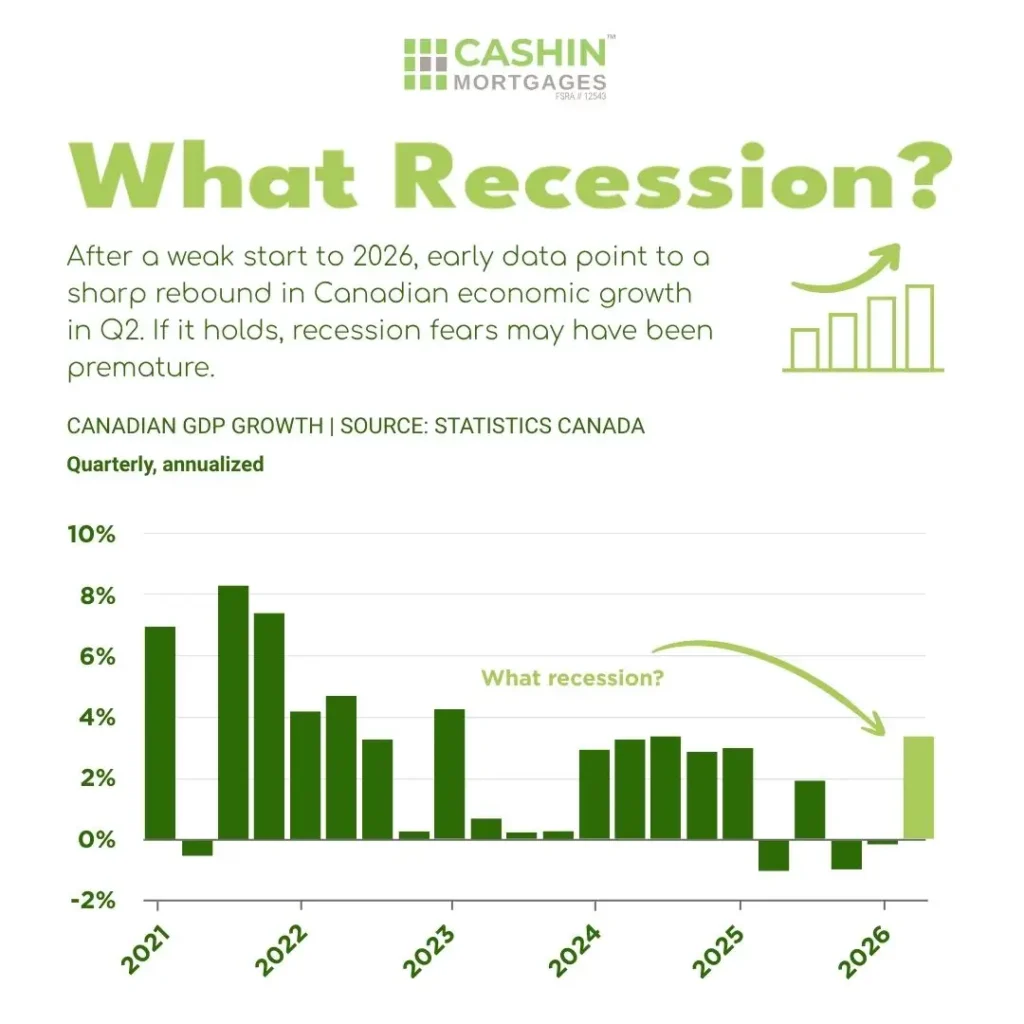
Canadian GDP growth infographic showing a sharp economic rebound in the second quarter of 2026

Another major change taking place across Canada's housing market is the composition of new construction.

CMHC reported that Canada's strong housing construction performance in 2025 was driven largely by record rental apartment construction, while the homeownership pipeline particularly condominiums — weakened.

CMHC's 2026 outlook expects rental construction to remain an important source of new supply, although it is expected to moderate from its recent peak. This creates an interesting divide in the housing market.

More rental construction could provide additional options for tenants and help ease rental-market conditions in some communities. At the same time, weaker ownership construction could create challenges for future buyers if demand increases faster than the supply of homes available for purchase.

What Does This Mean for Real Estate Investors?

For investors, increasing rental supply is something to watch carefully.

More rental properties could influence:

  • Vacancy rates
  • Rental growth
  • Property values
  • Cash flow
  • Financing requirements
  • Overall investment returns

The impact will vary significantly by market.

Investors should evaluate each opportunity based on its location, purchase price, financing structure, expected cash flow and local rental conditions rather than relying solely on national housing statistics.

The key takeaway: More rental construction may help renters in the near term, but declining ownership construction could have longer-term implications for Canada’s housing supply.

What Does This Mean for the Canadian Housing Market?

The biggest takeaway this September is that Canada’s housing market is becoming increasingly regional and complex.

Several forces are shaping the market at the same time:

  • New homeowner construction is slowing.
  • Mortgage borrowers are reassessing fixed and variable options.
  • Housing inventory is moving differently across provinces.
  • Trade uncertainty could create additional economic pressure.
  • New construction is increasingly focused on rental housing.

For homeowners and buyers, this means planning ahead matters.

For investors, it means looking beyond headline housing statistics and understanding the fundamentals of each market.

And for mortgage professionals, these trends create an opportunity to have more informed conversations with clients about their financing options.


How Cashin Mortgages Can Help

At Cashin Mortgages, we understand that every borrower has a different financial situation and different goals.

Whether you are:

  • Buying your first home
  • Renewing your mortgage
  • Refinancing
  • Consolidating debt
  • Accessing your home equity
  • Purchasing an investment property
  • Self-employed or have non-traditional income
  • Looking for financing outside traditional bank solutions

Our mortgage professionals can help you understand your options and find a financing strategy that fits your situation.

Cashin Mortgages works with a broad network of lenders, including A lenders, B lenders and private mortgage lenders, giving clients access to a wider range of financing solutions.

Learn more about Cashin Mortgages and our mortgage solutions


Ready to Review Your Mortgage Options?

Don’t let changing market conditions catch you off guard.

Whether you’re buying, renewing, refinancing or exploring your next investment opportunity, speaking with a mortgage professional early can help you understand your options and prepare for what comes next.

Ready to explore your mortgage options?

Apply Online with Cashin Mortgages

Or contact Cashin Mortgages to speak with our team.

Cashin Mortgages: More Than Just Mortgages. We Can Help You Build Your Future.